Quick answer
Small businesses with aggregated turnover under $10 million can immediately deduct the cost of eligible assets costing less than $20,000 each, in the year they're first used or installed ready for use. The threshold is permanent from 1 July 2026. It can apply whether you pay cash or finance the asset, as long as the business owns it, but leased assets are treated differently. A write-off reduces tax; it doesn't make a purchase free, so buy what the business actually needs.
Key points
- $20,000 per asset, for businesses with aggregated turnover under $10 million.
- Permanent from 1 July 2026.
- The asset must be first used or installed ready for use in the income year.
- Financed assets you own can qualify; leases are treated differently.
Every May and June, the same conversation happens in workshops and offices around the country: “should we buy that before 30 June for the tax?”. The instant asset write-off is a genuinely useful tool for small businesses, and from 1 July 2026 its $20,000 threshold is permanent. But it’s also widely misunderstood, especially when finance is involved. Here’s what owners need to know.
This is general information, not tax advice. Your accountant should confirm how the rules apply to you.
How does the instant asset write-off work?
According to the ATO:
- Small businesses with aggregated turnover of less than $10 million can use it.
- Eligible depreciating assets costing less than $20,000 each can be deducted in full.
- The asset must be first used or installed ready for use in that income year.
- The $20,000 threshold applies per asset, so several assets can be written off in one year.
- The threshold is permanent from 1 July 2026, following the 2026–27 Budget.
Assets costing $20,000 or more go into the small business depreciation pool: 15 per cent in the first income year, 30 per cent each year after. If the pool balance is under $20,000 at the end of an income year, it can be written off too.
Does financing an asset affect the write-off?
The deduction follows ownership, not how you paid.
| How you acquire the asset | Who owns it | Write-off generally available? |
|---|---|---|
| Cash | The business | Yes, if eligible |
| Business loan (unsecured or property-backed) | The business | Yes, if eligible |
| Chattel mortgage | The business | Yes, if eligible |
| Finance lease or rental | The financier | No: lease payments are treated differently |
| Hire purchase | Depends on the arrangement | Ask your accountant |
So a business can finance a $17,000 asset, own it from day one, and still claim the full write-off in that year, while also generally deducting interest on the loan as it’s paid. For more on the different structures, see asset finance explained.
Why does “installed ready for use” matter so much?
This is where June purchases go wrong. The write-off applies in the year the asset is first used or installed ready for use, not the year you ordered or paid for it.
- A coffee machine delivered on 28 June but not plumbed in until 5 July: generally next year.
- A ute picked up and registered on 27 June: generally this year.
- A batch of laptops ordered on 20 June, arriving on 8 July: generally next year.
- A cool room installed and running by 29 June: generally this year.
If you’re buying close to 30 June, check lead times and installation dates with the supplier before relying on the deduction.
What does the write-off actually save?
Less than many people think. A deduction reduces taxable income; it doesn’t refund the purchase.
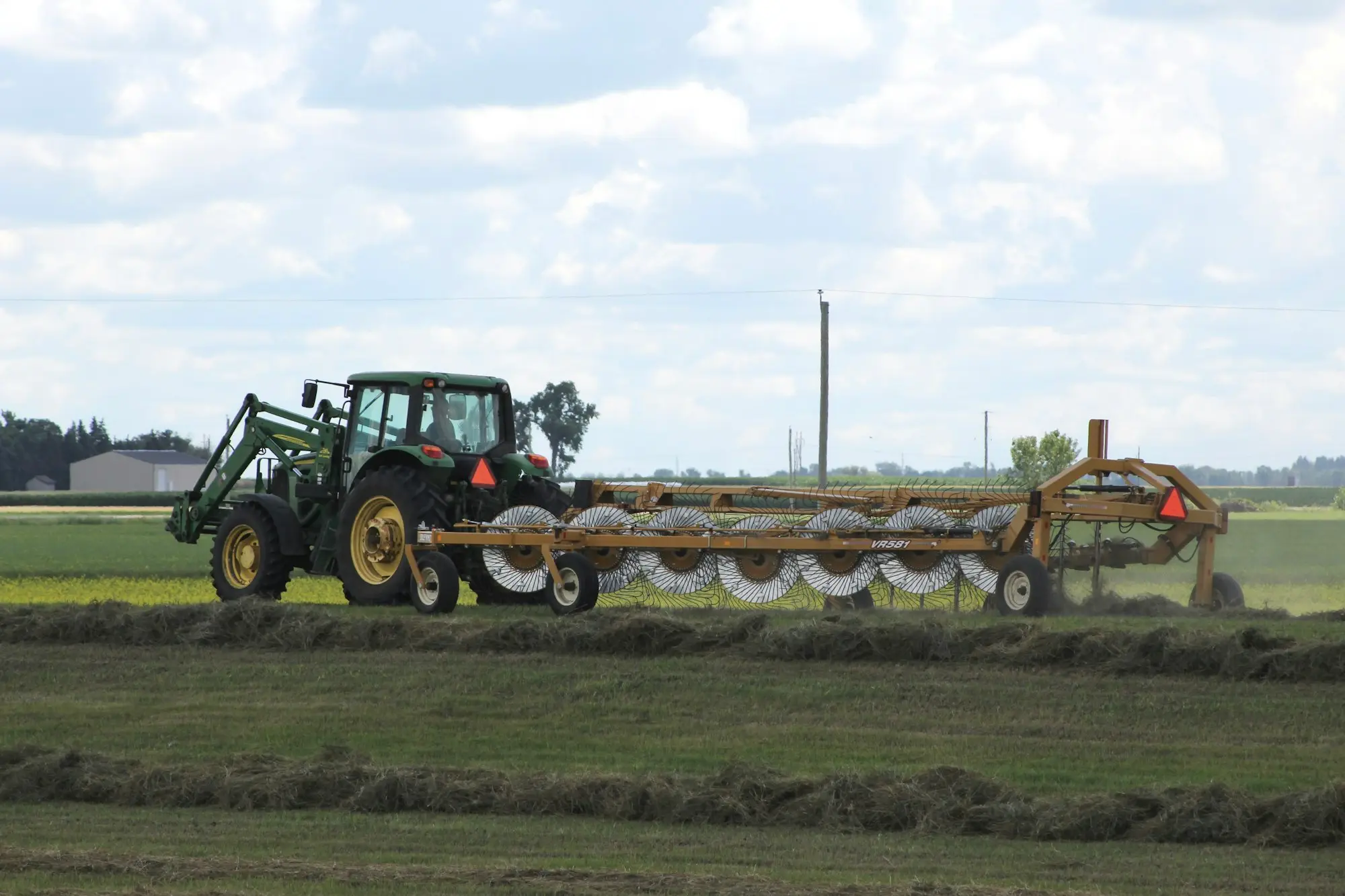
Illustrative example. A Toowoomba farm contracting business buys a $16,000 slasher for its tractor in May. If its marginal tax rate is 25 per cent, writing the slasher off in full reduces tax by around $4,000 in that year. The business is still $12,000 out of pocket. If the slasher earns its keep through extra paddock work, that’s a good purchase with a timing bonus. If it was only bought for the deduction, the business has spent $12,000 on something it didn’t need.
The real question is always whether the purchase pays for itself. The tax timing is a bonus on top. Our purchase payback calculator shows how quickly a purchase earns back its cost.
How do financing and the write-off work together?
For the right purchase, they combine well:
- The asset is working for the business straight away.
- The write-off brings the tax deduction into the first year.
- Finance spreads the cash cost over the asset’s working life.
- Interest on the business loan is generally deductible as it’s incurred.
That can leave a business with better cash flow in year one than paying cash. But don’t stretch the finance longer than the asset’s useful life just to keep repayments down. Our guide to buying outright or financing covers that balance.
Which purchases commonly fall under $20,000?
- Laptops, computers and POS systems; see IT equipment finance.
- Coffee machines, fridges and smaller kitchen equipment.
- Tools, compressors, welders and small workshop gear.
- Trailers and some farm implements.
- Office furniture items.
- Some second-hand vehicles and small machines.
Larger items, like most new utes, trucks, heavy machinery and fit-outs, usually exceed the threshold and are depreciated.
What are the common mistakes?
- Buying for the deduction alone. The deduction is a fraction of the cost.
- Missing the installed-ready-for-use date. Late delivery pushes the deduction into next year.
- Splitting one asset across invoices. If it’s really one asset, it’s one asset.
- Draining cash in June and being short in July when BAS and wages fall due.
- Assuming leases qualify. The financier owns a leased asset.
What should you ask your accountant before June?
A short conversation in April or May can save a lot of June stress. Questions worth asking:
- Is the business eligible, based on aggregated turnover?
- Which planned purchases are likely to fall under $20,000 each?
- Would bringing a purchase forward help this year, or would the deduction be worth more next year?
- How will finance or leasing change the treatment of a specific asset?
- What’s the cash position going into July, with BAS and wages due?
Your accountant can also tell you whether the simplified depreciation rules are the best choice for your business overall. It’s general guidance from us; the specifics belong with them.
Keep the records that support the claim
Whatever you buy, keep the tax invoice, proof of delivery and a note of the date the asset was first used or installed ready for use. For installed equipment, the installer’s completion certificate or job sheet is useful evidence. If you finance the purchase, keep the loan contract too, since your accountant will need it to separate interest from principal. Good records make tax time faster and give you a clear answer if the ATO ever asks about the timing of a claim.
Thinking about a purchase before 30 June?
If the purchase makes sense on its own, finance can let you get it working and keep your cash for the new financial year. Asking us won’t put anything on your credit file; a check is only discussed once you decide to go ahead. We don’t fire your enquiry off to a list of lenders. A real person looks at the purchase and the timing, and calls you with options.
Please be accurate about what you’re buying, the cost and when you need it installed, so we can work to your deadline. Start your enquiry.
Frequently asked questions
Can I claim the instant asset write-off on equipment I finance?
Generally yes, if the business owns the asset, such as through a business loan or a chattel mortgage, and it meets the other conditions. Under a lease or rental, the financier owns the asset, so the treatment is different. Confirm with your accountant.
Is the $20,000 limit per item or in total?
Per asset. A business can write off several eligible assets in a year as long as each one costs less than $20,000. Be careful with items that are really one asset split across invoices.
Does buying on 29 June count?
Only if the asset is first used or installed ready for use by 30 June. An order placed but not delivered, or delivered but not installed, generally doesn't count for that year.
What happens to assets over $20,000?
For small businesses using simplified depreciation, they go into the small business pool, which is depreciated at 15 per cent in the first income year and 30 per cent in later years. If the pool balance falls below $20,000 at year end, it can be written off.
Should I buy something just for the tax deduction?
No. A deduction reduces tax on money you've spent; it doesn't give the money back. A $15,000 purchase might save a few thousand dollars in tax, but you're still out the rest. Only buy what earns its keep.